

Loyalty is making a comeback.
With missions, masterclasses and rewards, it is giving engagement a new look. Paying per post doesn’t scale, and one-time collabs don’t build durable advocacy.
This is where customer and creator communities come in.
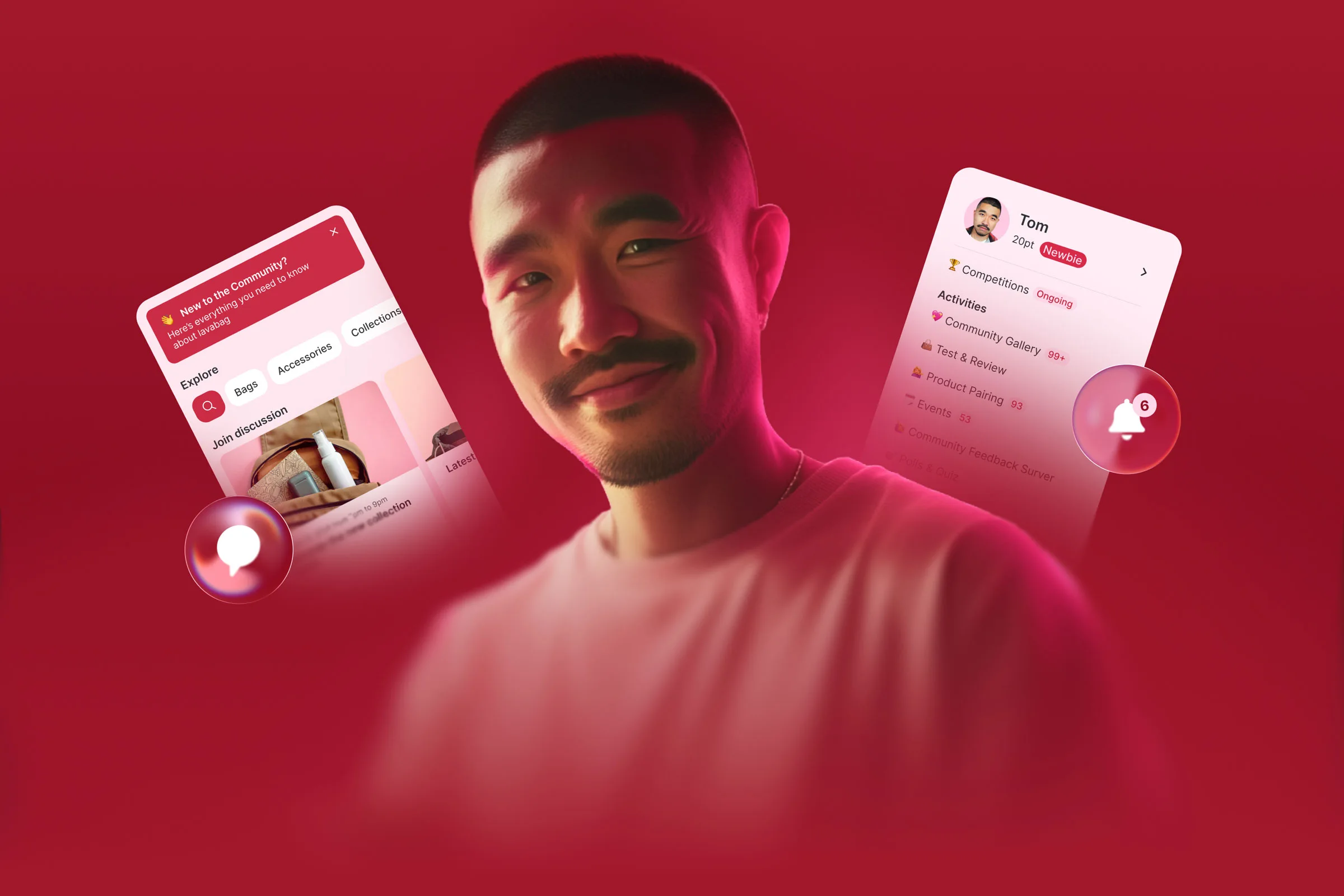
A customer community is a branded, always-on space where your customers or creators gather to participate, not just observe. They participate in testing products, sharing UGC, joining live moments, giving feedback, and learning.
Creator communities are brand-led ecosystems where creators collaborate, learn, and grow together around shared interests or goals. Unlike one-off influencer campaigns, these communities are built for long-term engagement and mutual value. In a creator community, brands invite a network of vetted creators to participate in missions, product tests, workshops, and co-creation opportunities.
It’s a programmatic relationship (with personalisation, games, missions, and exclusive access) rather than a series of one-off campaigns.
70%
of those between the ages of 18 and 45 want to join a brand’s customer community.
Skeepers Consumer Survey Report,
Done right, a customer or creator community becomes a repeatable growth engine. It helps brands attract new customers/creators, retain existing ones, and continuously generate authentic content that fuels every campaign.


Co-creation and belonging define loyalty
In recent years, research has shown that co-creation within brand communities strongly correlates with both brand affinity and behavioural loyalty. It means participants are more likely to feel emotionally invested and to repeat purchases. For example, one study found that when customers actively participate in co-creation, such as content contribution, then 63% of positive changes in emotional loyalty towards the brand and 57% in behavioural loyalty can be observed.
In 2026, loyalty is no longer about points or perks. It’s about purpose, participation, and peer identity.
Brands are turning communities into living labs where customers test products, share feedback, and see their voices shape the product roadmap.
When a member of a creator or customer community co-designs a new feature, contributes a review video, or helps moderate live sessions, they have a sense of belongingness. That feeling delivers dividends.
One study of online brand communities concluded that when social interactions within the community engage customers, the outcome is higher brand trust and stronger loyalty. Another recent insight from McKinsey & Company notes that community-centric brands “earn engagement and loyalty with high returns and low risk by making members participants, not just observers”.
For marketers, this means designing for inclusion not just consumption. Encourage UGC, invite feedback, reward collaboration, and spotlight community milestones. The result is a flywheel of advocacy with brand influence coming from many voices and not just one.


The Power Shift to Customer Communities
The balance of power in the marketing ecosystem is shifting.
Brands used to build communities around influencers; now communities are building brands around real customers. Customer communities are branded, always-on hubs where members share feedback, co-create, and advocate. These communities are now becoming a strategic asset. In these spaces, customers consume, contribute, connect and collaborate.
Data backs this shift. One study found that a positive attitude toward a brand community corresponded with extremely strong loyalty effects (R-squared = 0.83) in its sample.
As brands head into 2026, the smartest investments will also be in customer-centric communities. These are the places where feedback flows, content is created, advocacy is born and trust is earned.
Gamification and engagement sit at the heart of loyalty
The programs that are winning in 2026 pair gamified incentives (clear ways to earn points, perks, exclusive access) with creator development (masterclasses, briefs, backstage moments). One leg drives volume and the other builds belonging.
According to Deloitte, a majority of Gen Z and Millennials prefer gamified recognition in loyalty experiences, meaning rewards beyond simple points. They want badges, status, and challenge mechanics.
“Gamification is really at the heart of this program… and we treat creators as partners, giving them added-value experiences.”


L’Oréal’s L’Oréalist program highlights the other side of loyalty: growth and belonging. It’s built for micro and nano creators who want to learn, connect, and grow their craft, not just earn rewards.


At Veepee (VP), a retailer with 15M logged-in members in France, “the club” community moved beyond one-time campaigns to a weekly, always-on engagement rhythm. Members earn recognition and rewards for missions (testing, challenges, live events, co-creation labs) and return every week because there’s something new to do.

While gamification keeps them active, what truly drives engagement are masterclasses, TikTok sessions, creation tips, trend briefings, and exclusive brand events like Paris Fashion Week and the L’Oréal Awards.
In its first few months, L’Oréalist members completed an average of 15 missions each. They also logged higher visit rates than other communities.
Learning and access create deeper loyalty than points alone can.
“If your whole community is only transactions and gamification, you attract ‘bounty hunters.’ The best creators also want the engagement piece, the chance to grow.”

Why this works for the business?
In gamified loyalty programs, organizations see up to a 22% increase in customer retention compared to non-gamified programs.
Points and clear missions give brands predictable content throughout such as reliable UGC volume around new launches, seasonal moments, and evergreen themes. All of this without restarting from zero every time you brief.
The engagement leg that is masterclasses, creative feedback, trend direction, behind-the-scenes access creates identity and status inside the brand’s orbit. That identity is what sustains posting even when there’s no immediate prize attached. It’s what improves quality over time. Think about better angles, stronger hooks, more product-truth language that lifts conversion and GEO/SEO signals.
A 2025 study in Asia found that gamification features (immersion, achievement, social interaction) strongly reinforce brand engagement and, in turn, brand loyalty and purchase intention.
VeePee proves that community activations can attract new buyers and boost conversions during key moments. L’Oréalist shows the other side of the equation: a well-structured loyalty program cuts seeding costs by using a points system. They turn creator activity into valuable reviews, GRWMs, short demos that often outperform brand-made content on product pages and in ads.
Influencer Communities Create Brand Advocates
In the creator economy of 2026, the loudest voice is not of one influencer but of many, aligned, active and committed influencers. Brands are no longer running isolated influencer deals, they’re building creator communities where participants become long-term advocates.
Why this matters:
When creators feel part of the brand story rather than paid for a moment, their followers sense authenticity and that drives stronger results.


What this looks like in practice:
- Instead of single paid posts, a brand might invite 50-100 creators into a community where they create content, participate in product launches, and test prototypes.
- These creators then generate UGC such as unboxing videos, honest reviews, micro-tutorials that resonate because it’s grounded in a shared purpose, not just a brief.
-
Over time, those creators evolve from campaign participants into brand advocates who not only post content but aplify the brand, respond to followers, generate peer-to-peer recommendations, and amplify buzz organically.
- When influencer communities are structured as ecosystems, engagement rates rise (because creators feel invested), trust increases (because content feels genuine), reach expands (because advocates share authentically) and conversion lifts (because audiences respond to voices they recognise).
Mass Seeding Drives Incremental Sales
Convincing modern consumers to care about your brand takes more than big budgets and bold campaigns.
That’s where product seeding has evolved into one of the most effective growth levers for brands in 2026. What started as a grassroots tactic has become a trust-generation engine that feeds both visibility and conversion.
Consumers are more discerning than ever. They skip ads, scroll past polished videos, but they turn to the voices that feel closest to them. Micro/nano creators, real users, and communities that speak their language are one of them. When a product begins to appear repeatedly across their feeds through everyday people, their curiosity turns into credibility.
This is the quiet power of mass seeding.
74%
of consumers trust product recommendations from creators and peers more than from brands themselves. Organic signals such as unboxings, quick demos, “first impressions” trigger something that polished marketing rarely can. That thing is belief, and belief sells.
Source: Skeepers Consumer Report.


Each seeded post becomes a digital breadcrumb across the discovery journey. One creator’s morning routine on TikTok, another’s product selfie on Instagram, a short testimonial on YouTube, all of these together create distributed social proof.
This repetition across touchpoints mirrors how consumers actually decide by collecting cues, comparisons, and confirmations.
Unlike traditional campaigns that fade after the spend ends, seeded content keeps compounding. It fuels paid ads as high-performing UGC, enhances product pages, and boosts discoverability in both social and AI-driven search.
For brand leaders, this trend signals a mindset shift. You don’t need to outspend competitors. You need to outseed them.
Brands and Creators Commit for the Long Run
Audiences smell a forced endorsement a mile away.
In a roundup of brand-creator practices, 79% of influencers said they prefer long-term brand partnerships, citing stability, ongoing exposure, and creative growth.
A long-term brand–creator collaboration is more than a recurring campaign. It’s a strategic partnership that blends brand goals with creator authenticity.
For brands, it means turning creators into advocates who understand your values, product cycle, and voice. Long-term collaboration means less hand-holding and more harmony. Over time, creators become deeply familiar with the brand’s personality, tone, and values. They instinctively know how to showcase products in ways that feel authentic and on-brand.
This reduces the need for extensive onboarding or creative direction on each campaign. It frees up brand teams to focus on strategy rather than grooming new influencers from scratch. It also fosters a sense of belonging among creators, who begin to see themselves as part of the brand’s extended family, not just as collaborators, but as true partners in storytelling.
For creators, it means more than repeat deals. Over time, they’ve used, tried, and tested the brand’s products, understanding what truly works and what doesn’t. They can guide their audiences with utmost authenticity, showing how to use products in ways that deliver real, visible results. After working with a brand across multiple campaigns, they often develop a natural sense of loyalty and attachment. One that shows up in their daily routines, storytelling, and even unprompted mentions.

This loyalty is a powerful currency for brands. When creators genuinely believe in a product, their influence shifts from persuasion to advocacy. This turns trust into traction, and traction into long-term growth.
“I’ll pass on a deal if the brief makes me say I ‘love’ a product I haven’t tested. My audience is smart—once you lose trust, it’s almost impossible to win back.”

In the past, creative briefs dictated tone, script, and visual direction. Today, those same guardrails can backfire. The most effective briefs now inspire rather than prescribe. They set the narrative direction while leaving space for creators’ natural voice and audience understanding.
Long-term partners already know what resonates with their communities, how to introduce a product, when to add humor, and how to build trust in a few seconds. Instead of asking them to follow a script, brands share intent and insight such as key messages, emotional triggers, and even 3–5 searchable keywords that enhance visibility in TikTok and Shorts SEO.
This works because 79% of consumers trust recommendations from people they follow over any form of brand advertising (Skeepers Consumer Report). When creators adapt brand messages in their own storytelling style, they maintain credibility and amplify discoverability.


A Mini Playbook for Marketers
-
Build a points-for-proof system that rewards the behaviors you value (on-brand posts, timely reviews, live participation, syndication) and publish a weekly cadence so creators know there’s always a next mission
-
Balance that with real development such as a quarterly masterclass calendar, hands-on creative feedback, and a pipeline of exclusive access moments (events, backstage previews, limited collabs).
-
Curate who gets in. L’Oréal set a 5,000-follower minimum cap to maintain content quality, then recognized members’ progress to keep motivation high.
-
Track it like an investment: activation rates, missions per member, return visits, first-time buyers, and how community content performs on product pages or in ads.
-
Over time, you’ll find what VeePee and L’Oréal found. Gamification supplies the engine; engagement supplies the fuel, and together they compound.