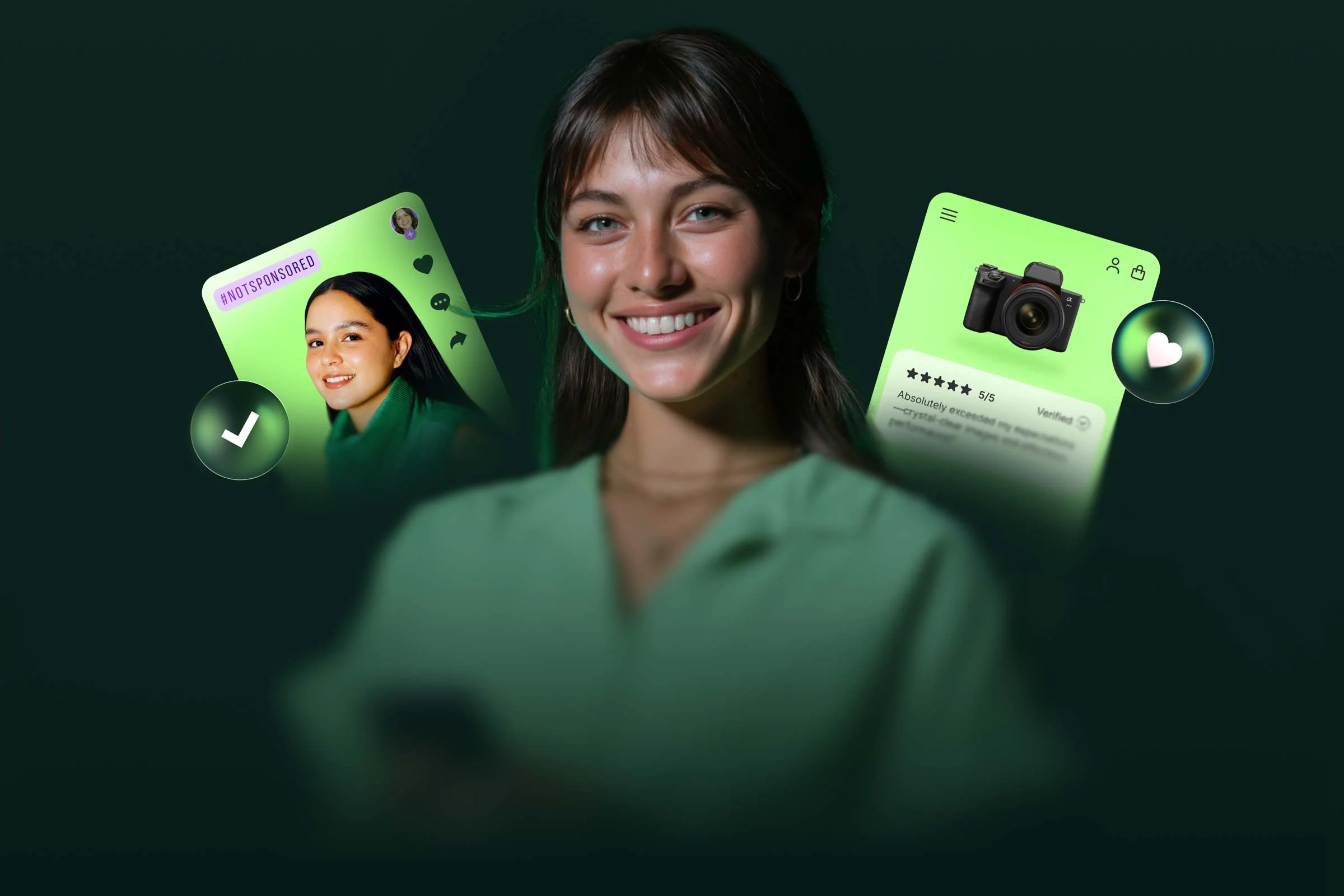


Authenticity becomes the new algorithm.
The explosive use of AI in daily life has consumers wondering what’s real and what’s not. As synthetic images, AI-written articles, cloned voices, and deepfake reviews flood every platform, trust has become the most fragile currency in commerce.
2026 marks a turning point. Consumers no longer assume content is human. They question it. They verify. They cross-check. And when uncertainty rises, one behavior becomes universal — people turn back to other people. Real customers. Real creators. Real experiences.
Below are the micro shifts reshaping how trust is built in an AI-first world.
Verified UGC Becomes the New Proof of Reality
In an era where anything can be generated, edited, or enhanced by AI, consumers no longer take content at face value. The default mindset has shifted from believing until proven wrong to doubting until proven real. This is why verified UGC has emerged as one of the most powerful trust drivers in 2026.
- AI-generated images may look flawless.
- AI-written reviews may sound convincing.
- But consumers want authenticity they can feel.


And nothing feels more real than UGC that carries a signal of legitimacy such as verified purchases, in-app recordings, time-stamped videos, creator authentication badges, verified third party badges and content published directly through trusted platforms.
Consumers are actively seeking “proof of reality” across every stage of the buying journey.
This is driven by a simple psychological shift:
When synthetic content is everywhere, the human voice becomes a rare asset.


Transparency Becomes a Competitive Advantage
As synthetic content grows more sophisticated, consumers have become hyper-aware of how brands communicate, what they disclose, and how honest they appear.
2026 consumers are not passive. They actively inspect, question, and verify. They ask:
- Was this created by a human?
- Is this review real?
- Is this creator genuinely recommending the product?
- Is this demo edited, filtered, or AI-generated?
Brands that answer these questions openly earn trust. Brands that hide the truth lose it.
Consumers now reward honesty over polish
We’ve entered an era where the most trustworthy brands are the ones that reveal the most. Transparency signals integrity, and integrity drives preference. This shift is visible across platforms:
- TikTok users favor videos tagged as “#notsponsored” or “#honestreview.”
- Amazon reports significant conversion lifts when reviews show “verified purchase” labels.
- Instagram posts that disclose paid collaborations see higher authenticity scores and better engagement quality.


Transparency doesn’t reduce influence in fact it amplifies credibility.
Index