








 Index
Index



In summary
Trust has become the scarce resource in consumer marketing, and social proof content is what buys it back. The short verdict: seven types of social proof exist, and each carries weight at a different moment in the decision. According to BrightLocal’s 2026 consumer review survey, 97% of consumers read reviews before choosing what to buy. What they read, and whether they believe it, is the whole game.
Quick definition : Social proof content is any asset produced by customers, creators or third parties that shows other people already trust a brand.
- Seven types exist, from reviews to third-party badges
- Each type carries weight at a different decision stage
- Persuasion depends on realness, specificity and recency
- Brand-produced messaging cannot substitute for it
- Verification is what separates proof from decoration
What social proof content is, and why it stopped being optional
Most explanations of what is social proof content stop at the list of formats. Reviews, ratings, testimonials, creator videos, done. Accurate, but it tells you nothing about which asset moves a hesitant buyer.
Here is the clearer definition. It is everything on your product pages that you did not write. The source sits outside your marketing team, and the shopper can tell.
Why did this become non-negotiable? Because the sheer volume of brand messaging a person absorbs in a day has made brand claims close to meaningless. A brand saying its serum absorbs fast is noise. Four hundred buyers saying so, with photos, in their own words, is truth.
Social proof content vs. brand-produced content: the credibility gap
Brand copy explains what a product should do. Customer proof shows what it did for someone recognizable.
Consider the mechanics. Your copy is optimized, legally reviewed, and written by someone paid to make the product look good. Every buyer knows this. So they route around it. They scroll to the reviews, open the photos, and check whether anyone with their skin type or their shoe size bothered to write something.
Authenticity here is a question of who benefits: a customer with nothing to gain is credible in a way a brand with everything to gain cannot be.
The consumer shift: buyers now audit proof before they buy
Shoppers no longer receive proof passively. They go looking, and they cross-check.
That audit runs across three channels now. Search, where a certification page or a review aggregate surfaces. Social media, where the real verdict often lives: according to Google’s own research reported by TechCrunch, almost 40% of users aged 18 to 24 turn to TikTok or Instagram rather than Google Search or Maps when they want to find something. And AI assistants, which synthesize both and often answer before anyone clicks.
Your proof has to exist in places you do not own, in formats you did not commission, and survive being checked. Recency matters more than teams assume: BrightLocal found that 74% of consumers look specifically for reviews written in the last three months, and 32% narrow that window to the last two weeks.
The 7 types of social proof content, ranked by persuasive power
Rankings of social proof examples usually sort by how easy each type is to produce. This one sorts by persuasive weight instead. The two lists come out close to inverted, which is why so many programs end up lopsided.
Reviews and ratings
Customer reviews sit at the top of the list. They combine three things nothing else does at once: volume, a numeric score a shopper scans in half a second, and specific language in a buyer’s own vocabulary.
The evidence is unusually solid. Research from the Spiegel Research Center at Northwestern found purchase likelihood for a product with five reviews is 270% higher than for the same product with none, and that the effect is stronger on expensive items than cheap ones.
Not all of them weigh the same, though. Verified reviews, where the platform checks that the writer actually bought the product before publishing, carry more weight than open-deposit reviews anyone can submit. Spiegel’s researchers put a number on it: purchase likelihood rises 15% when a shopper sees a review written by a verified buyer rather than an anonymous one.
Two collection routes exist. Post-purchase reviews from verified buyers, and gifted reviews, where a brand sends product to a member of a verified creator community in exchange for honest feedback, disclosed as such. Both produce genuine proof. The second is often how new products get their first reviews before organic volume exists or as a way to keep review volume fresh since recently is so important.
Video UGC and creator content
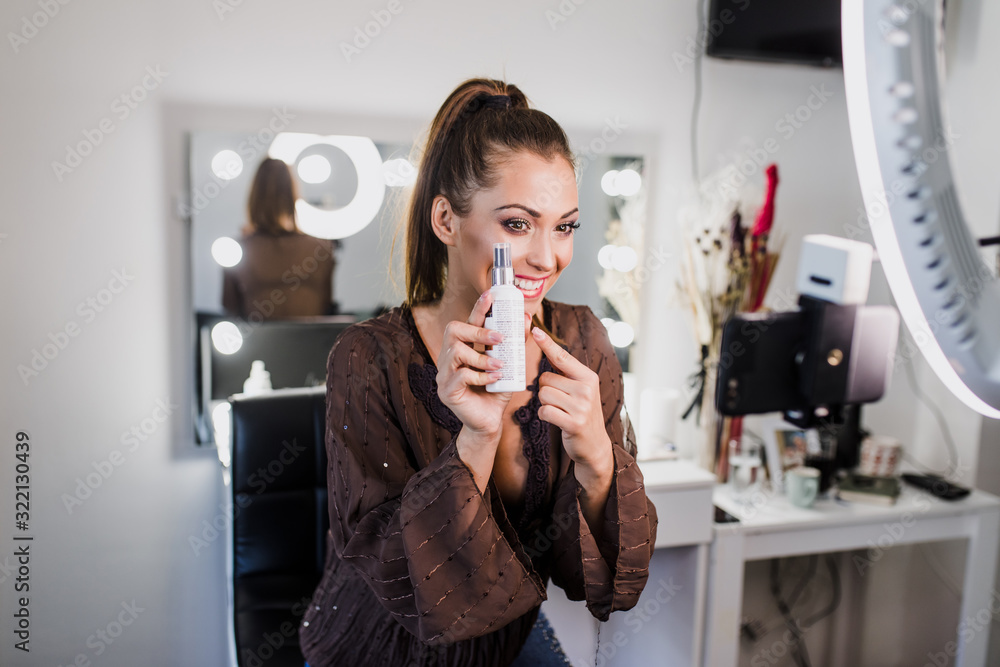
Video wins discovery. Nothing else demonstrates a product in a real kitchen, bathroom or gym with the same speed, and nothing else gets past a scrolling thumb.
What makes it persuasive is not the format. It is the visible absence of a set. Bad lighting reads more honest than a lit studio, which is why brands that hand creators a shot list and a script end up with assets that perform like ads. They are ads.
The best of it travels. One creator video can live on a listing page, in paid social, on a retail detail page and in an email, which is the argument for treating it as an asset rather than a post.
Photo reviews and real-life product shots
Photo reviews answer the question a product description structurally cannot: what does this look like, on someone like me?
For anything where appearance carries the purchase, this is decisive. Shade, fit, texture, scale. A foundation swatch on ten different arms tells a buyer more than any brand image, because the brand image was shot once, on one person, under controlled conditions.
They are also cost-effective. Adding a photo field to your review flow costs nothing and lifts the quality of everything downstream.
Community and advocacy signals
This is the layer most brands ignore, and it compounds differently from the others.
A visible member base signals that people are loyal customre. Not that they bought once, that they came back and kept talking, which is authenticity operating at the level of a group rather than an individual post. KICKS reports 48,000 community members, 2,379 pieces of content and reviews created by those members, and average order value 18% higher among them.
Brand advocacy is the output of that structure. Advocates answer other buyers’ questions, defend the brand in comments, and produce content nobody briefed. KICKS says 93% of member questions get answered by other members rather than by staff.
Expert and professional endorsement
Dermatologists, nutritionists, trainers, mechanics. Where a category carries technical risk, professional endorsement does something peer proof cannot: it vouches for safety and efficacy rather than for experience.
It is narrow, though. Outside regulated or technical categories it moves almost nothing, and buyers increasingly assume the expert was paid. Which is often correct.
Wisdom of the crowd: counts, bestsellers, real-time activity
Bestseller badges, purchase counts, “24 people bought this today,” restock waitlist numbers. Cheap to implement and genuinely effective at the final hesitation.
The mechanism is consensus, not quality. Someone reading a count is not evaluating the product. They are checking whether they are about to make a decision alone. That is a real objection, worth answering.
Trust seals, certifications and media mentions
Last by persuasive weight, and still worth having. Payment badges, third-party audits, press logos. Almost nobody is convinced by these. Plenty of people are reassured at checkout, which is a different and useful job.
One distinction matters, and it is the difference between claiming compliance and being audited. A badge anyone can buy is decoration. An independently audited standard is a verifiable claim: Verified Reviews is AFNOR-certified against the NF ISO 20488 standard, which governs how reviews get collected, moderated and published. Only the second kind survives an AI assistant being asked whether your proof is trustworthy.
Which social proof content works at which stage of the decision
Persuasive weight is not fixed and the traditional buyer has collapsed, with a traditional linear experience being replaced by something more dynamic. It’s still important to consider the various phases or decision stages a buyer moves through even if that movement looks differently.
| Decision stage | The question in the buyer’s head | Proof that answers it | Weakest here |
| Discovery | Does this exist and is it interesting? | Creator video, photo reviews | Third-party badges |
| Consideration | Does it work for someone like me? | Specific written reviews, photo shots, expert endorsement | Purchase counts |
| Decision | Is this the consensus choice? | Aggregate score, review volume, bestseller signals | Long-form testimonials |
| Checkout | Am I safe transacting here? | Trust badges, audited standards, return commitments | Creator video |
| Post-purchase | Did I join something? | Member base, brand advocacy | Everything else |
Read the social proof examples in that table as a diagnostic, not a plan. Heavy traffic with a flat conversion rate usually means the discovery row is fully funded and the decision row is thin. A strong conversion rate on tiny traffic is the opposite failure, a discovery problem dressed up as a good quarter.
What convinces consumers, and what no longer does
Something changed in the last three years, and it was not buyer sophistication about products. It was buyer sophistication about proof.
People now read customer content the way an editor reads a press release. They look for tells. Production polish, phrasing that sounds written by committee, uniform five-star scores, dates that cluster suspiciously. The Federal Trade Commission’s rule on consumer reviews, finalized in 2024, banned fake and AI-generated reviews outright, along with bought followers and suppressed negative feedback. Regulation followed the suspicion. It did not create it.
So what convinces now? Three things are of note.
Proof of realness now beats production value
For roughly fifteen years the instinct was to make customer content look better. Cleaner, brighter, on brand. That instinct is now actively harmful.
A shaky vertical video with a real bathroom mirror in frame outperforms a polished cut of the same testimonial, and the gap widens as synthetic content floods feeds. Why? Because polish is exactly what a fabricated asset would have. Roughness is expensive to fake convincingly and cheap to produce honestly, which makes it a credible signal.
Several speakers made this argument in the Skeepers summit session on why authentic content cuts through the AI noise. It matches what performance teams see in creative testing: the rawer cut usually wins on hook rate.
There is a limit. Realness does not excuse unusable footage, wrong aspect ratios or content that breaks disclosure rules. Authenticity is about origin, not about neglect.
Specificity, recency and volume: the three credibility multipliers
Take one review. “Love it, great product, five stars.” Now another. “Used it for six weeks on combination skin, no breakouts, the pump wastes a little at the end.” The second is worth more than ten of the first.
Specificity is the strongest multiplier. Named use cases, durations, skin types, sizes, minor complaints. A small complaint inside a positive review raises credibility rather than lowering it, and this is not a hunch: Spiegel’s researchers found that the presence of negative reviews brings authenticity to a site’s review content, and that 82% of shoppers actively seek negative reviews out.
Recency comes second. A page whose newest review is eighteen months old reads abandoned. Volume comes third and saturates: Spiegel found the marginal value of each additional review drops sharply after the first five, while BrightLocal reports 47% of consumers avoid a business with fewer than 20 reviews.
One more counterintuitive point, on the score itself. Spiegel found purchase likelihood peaks between 4.0 and 4.7 and then declines as it approaches 5.0. A perfect rating reads as filtered.
The five signals shoppers now read as fake
| Signal | What the buyer concludes |
| Perfect 5.0 across hundreds of reviews | Negative feedback is being suppressed |
| Identical sentence structures across reviewers | Written by one person, or generated |
| Creator content that looks like a studio ad | Fully scripted, not a real opinion |
| Nothing newer than a year | Product or brand is inactive |
None of these require a forensic mindset. They are pattern recognition, and authenticity is now judged on exactly this kind of surface reading, by people with thousands of hours of practice.
Proof only works if it holds up when someone checks it. See how brands collect proof that holds up
Where social proof content comes from
Here is the operational problem behind everything above. Every type in the ranking has to be produced by somebody who does not work for you, on their own time, with no obligation.
That is why so many brands have a strategy for social proof marketing and no supply of it. Three sources exist.
Customers: customer reviews and gifted reviews collected at scale
Your buyers are the largest and least exploited source. Two flows matter.
Post-purchase collection, triggered when the product has been used rather than when it shipped. Timing is most of the battle, and it varies by category: a candle can be reviewed in days, a retinol needs six weeks.
Then gifted reviews, which solve the cold-start problem no post-purchase flow can touch. A new launch has no buyers, therefore no reviews, therefore worse conversion, therefore fewer buyers. Seeding product to vetted creators breaks that loop. Make Up For Ever took its ship-to-post rate from 40% to 97% after restructuring its gifted program, generating close to 1,000 customer reviews at a 4.7 average and a 95% recommendation rate.
Creators: gifted campaigns built to produce usable assets
Most creator programs are built to generate posts, but the content is what is most valuable.
A campaign designed for assets specifies deliverables, formats, aspect ratios and usage rights up front, so what arrives can run in paid, on listing pages and at retail. A campaign designed for reach specifies a posting date and hopes. The first compounds. The second evaporates in 48 hours.
Scale changes the requirement too. At twenty creators a spreadsheet works. At two hundred, briefing, shipping, chasing and rights collection stop being coordination and become a systems problem. Skeepers publishes an 85% average ship-to-post rate across its influencer marketing programs, which is the number that matters most here: a package that never produces content is pure cost.
Community: the belonging flywheel that generates content on its own
The third source changes the unit economics, and almost nobody builds it deliberately.
A community is not a mailing list with a nicer name. It is a structure where members get status, access and a reason to keep showing up, and where content is a byproduct rather than the ask. NARS Cosmetics runs 32,000 members it calls NARSissists, with 30% active against an 18% beauty sector average, 33% more orders than non-members, and roughly 5% of revenue attributable to the group.
The flywheel: belonging produces advocacy, advocacy produces content, content brings new customers, some of whom join. Each turn lowers cost per asset, because you reactivate people who already know the products. Carl Johan Claesson and Rafael Viera Vilar walked through how KICKS and NARS built theirs in the session on building loyalty through belonging.
How Skeepers turns customer and creator voices into reusable proof
Skeepers Influencer Marketing solutions opens access to a verified community of 400,000 creators and consumers, including more than 100,000 micro and nano creators on Instagram, TikTok and YouTube. Briefing, disclosure checks, content rating and licensing sit inside the publishing flow rather than being negotiated afterward. That is what keeps authenticity intact while volume climbs.
The platform allows for brands so collect both video content as well as text reviews increasing efficiency. . This strategy is the shift from one-off campaigns to durable advocacy: the same creators come back, they already know the products, and each activation costs less than recruiting strangers. IVY Beauty reports a 70% watch-through rate on content it placed on Amazon and a 24% sales lift on detail pages carrying video.
How to put social proof content to work across channels
Collecting proof is half the job. In social proof marketing, most of the value leaks at distribution, because the asset lives in one place and dies there.
One asset, four placements: product pages, ads, retail, search
Take a single creator video of someone using a moisturizer for a month. Here is its full working life.
On the product page, cut to 20 seconds next to the star score and the review count. In paid social, run it as the hook variant against your studio creative, assuming your usage rights permit editing. At retail, syndicate the accompanying written review to your retailer listings, In search and AI answers, review text and structured rating data are what make your pages quotable to an assistant summarizing the category.
The blocker is almost never creative. It is rights. If editing, resizing and derivative use were not named in the agreement, three of those four placements are unavailable, and you find out mid-campaign.
What to measure
Skip the vanity layer. Four numbers tell you whether the program works.
Coverage: the share of active products carrying at least five recent reviews and one photo. This predicts conversion, and nobody tracks it.
Freshness: median age of the newest review per product. Past a quarter, your collection flow is broken regardless of total volume.
Ship-to-post: the percentage of seeded products that produce content. Below 60% you are funding logistics, not marketing.
Asset reuse: how many placements each piece reaches. One is a failure. Three or more means rights and workflow are working.
Attribution is harder, and worth being honest about. Isolating the revenue effect of social media proof from everything else running in a quarter is genuinely difficult, and any vendor promising a clean single number is overselling.
Want to see what this looks like on your catalog? Book your Skeepers demo
Q&A : social proof content
What is social proof content?
Social proof content is any asset created by customers, creators or third parties that shows other people already trust a brand: reviews, ratings, photo and video UGC, testimonials, community activity and certifications.
Social proof content is the category of assets a brand does not write about itself. It includes verified customer reviews and star ratings, photo reviews, video UGC filmed by real buyers or creators, written testimonials, case studies, expert endorsements, community and follower counts, and third-party trust seals. What separates it from brand content is the source: someone outside the marketing team produced it, and the shopper can tell. That external origin is exactly what makes it persuasive. Brand content explains what a product should do, social proof content shows what it actually did for someone comparable to the buyer. In 2026, most purchase decisions involve at least one of these assets before checkout.
Which type of social proof content converts best?
Verified customer reviews convert best at the decision stage, video UGC performs best at discovery. Strong programs run both, because each answers a different question in the buying journey.
There is no single winner, because the types operate at different stages. At discovery, video UGC and creator content win, they stop the scroll and demonstrate the product in a real setting. At consideration, photo reviews and specific written reviews win, they answer the objections a product description cannot. At the decision point, the aggregate rating and review volume carry the most weight, because they signal consensus rather than individual opinion. Trust seals and certifications matter last, as a reassurance layer at checkout. Brands that pick only one type usually over-invest in the discovery layer and leave the decision layer thin, which shows up as high traffic and flat conversion.
How much social proof content does a product page need?
Enough reviews for the rating to stabilize, and recent ones. Past a certain volume, recency and specificity influence buyers more than raw count.
Volume matters until the rating becomes statistically credible, then its marginal value drops fast. What keeps working after that is freshness and detail. A product page with dozens of reviews where the most recent is eighteen months old reads as abandoned, while the same page with a handful of reviews from the last quarter reads as alive. Shoppers also scan for specificity: reviews that name a use case, a skin type, a size or a duration of use do more work than generic five-star praise. The practical target is a continuous collection flow rather than a one-off campaign, so that every product keeps a visible layer of recent, detailed proof.
Can AI-generated content be used as social proof?
No. Social proof depends on a real person having used the product. AI can help produce and edit assets, it cannot be the source of the proof.
This is the line brands need to hold in 2026. Social proof works because a shopper believes a real person had a real experience, so synthetic reviews or AI-generated testimonials do not just underperform, they destroy the mechanism they imitate, and in most markets they raise legal exposure. Where AI legitimately helps is downstream of the proof: summarizing review themes, translating, editing creator footage, reformatting one asset for several channels. The practical implication is the opposite of what many teams assume. As synthetic content floods feeds, brands need to make their proof visibly and verifiably human, through purchase verification, named reviewers, unedited detail and traceable creator collaborations.

![What Is Shoppable Social Content? The Complete Strategy Guide for B2C Brands [2026]](https://skeepers.io/app/uploads/2026/05/AdobeStock_501963827-scaled.jpeg)